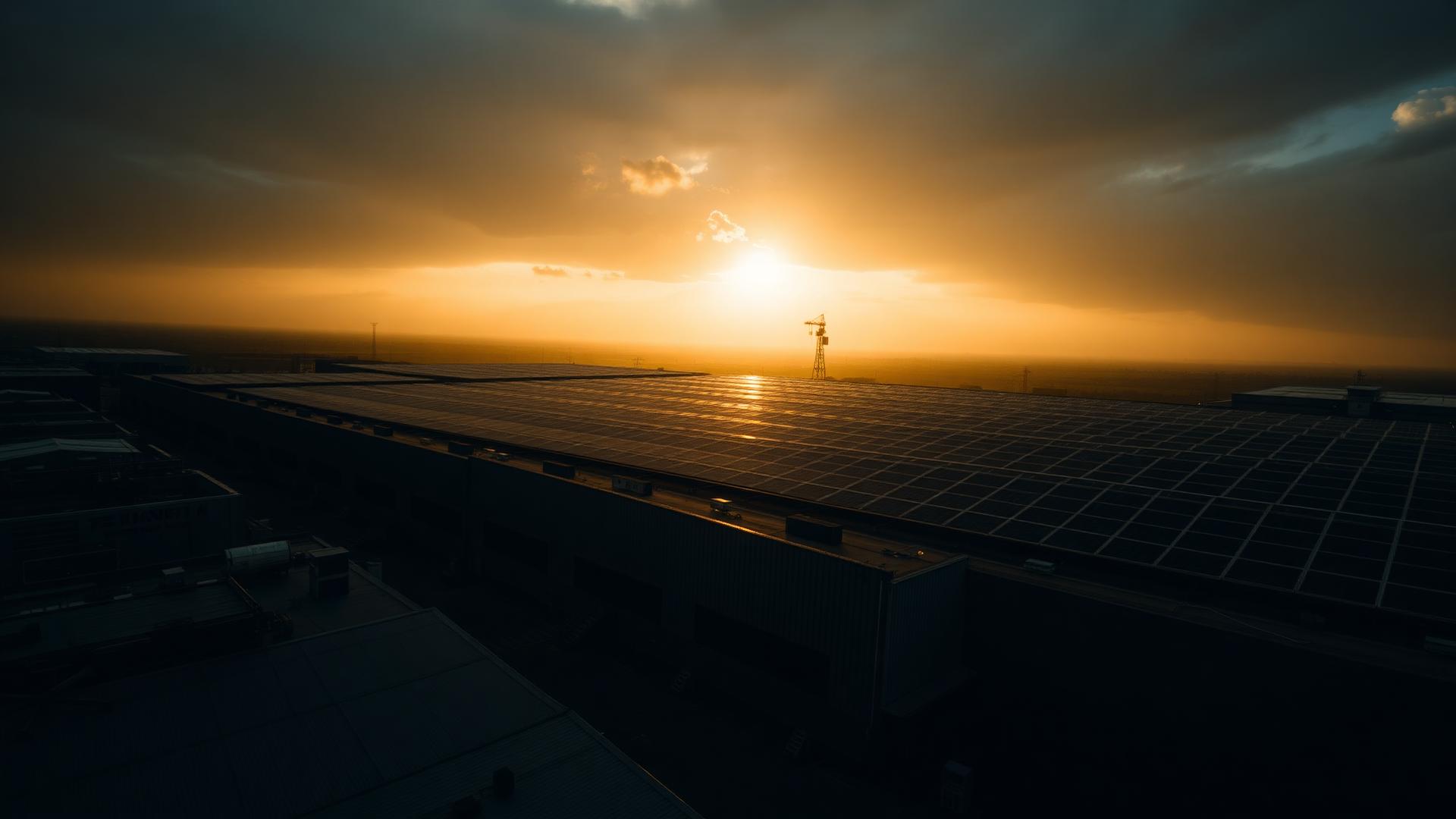
A facilities manager with forty buildings does not have a solar project, they have a prioritisation problem. Treating every site as an individual enquiry produces forty feasibility exercises, most of which conclude that the site is not worth doing, and a great deal of wasted survey time.
The screen that works is short: roof age and remaining life, structural headroom, metered daytime consumption against roof area, lease term remaining, and any known local network constraint. Five questions, answerable from records for most of the estate without anyone climbing a ladder.
Sites that pass all five are built first. They generate the savings, the operational learning and the internal credibility that make the rest of the programme easier to approve. Sites that fail on roof life go into the recovering programme instead, and sites that fail on load go to an energy cost audit.
02
Many meters, many contracts, many tenants
The complication that defines this sector is not technical. It is that the roof, the supply contract and the party paying the bill are frequently three different people, and the arrangement differs building by building across the same portfolio.
In a single let building with a full repairing lease, the occupier usually holds the supply and the landlord owns the roof, so consent and benefit have to be negotiated. In a multi let building, landlord services and common parts sit on a landlord supply while tenants hold their own, and generation can be directed to the landlord supply straightforwardly or to tenants only with a deliberate metering and contractual design.
The practical advice is to sort the estate by tenure structure as well as by physical viability, and to solve each structure once rather than each building once. The service charge treatment in particular is worth agreeing with your legal team early, because retrofitting it to an installed asset is much harder.
03
Standardise everything after the first site
The largest avoidable cost in a multi site programme is variety. Different inverter families, different monitoring platforms, different mounting systems and different maintenance arrangements across forty sites create an operational burden that quietly erodes the savings the projects were built to deliver.
A standard specification, a single monitoring platform with all sites on one dashboard, consistent equipment families with a common spares position, and one maintenance contract covering the portfolio are worth more than a small per site price advantage.
Standard reporting matters just as much. If the estate is contributing to a corporate carbon disclosure, the generation data needs to arrive in a consistent, auditable format rather than being assembled by hand from forty separate portals each quarter.
04
Sequencing with the wider capital programme
Solar rarely justifies its own standalone visit to a building. It justifies a place in work that is happening anyway.
A roof due for recovering within about a decade should have the array installed as part of that work, because installing first means paying to remove and reinstate it later. A building having its distribution board or intake upgraded should have the spare way and capacity allowed for at the same time. A car park being resurfaced is the cheapest moment it will ever be to lay ducting for canopies and charge points.
Mapping the solar programme onto the existing lifecycle plan usually produces a slower rollout on paper and a cheaper one in reality, and it is far easier to get approved because the disruption is already budgeted.
05
How NRG Solar works with an FM team
We assess and match. We do not install, we do not sell equipment, and we do not own assets, so we have no reason to tell you that a marginal building is worth doing.
For a portfolio, the useful starting point is a site list with addresses, annual consumption and lease positions. We screen it, rank it, and produce indicative figures for the sites that merit attention, then match the viable ones with one vetted installer working in that region rather than putting your estate out to a scramble of cold callers.
The service is free to you and the installer pays us only where work proceeds, which is exactly why we are willing to tell you that half your estate should not have panels on it.
Typical system size in this sector
Sites of this kind commonly support arrays in the region of 20 kWp to 400 kWp. Your own figure depends on roof area, orientation and load, which the free assessment below works out from your inputs.