01
The obvious constraint, stated first
You cannot shade the crop. Light is the product, and a glasshouse roof exists to deliver as much of it as possible to the plants underneath. Putting panels on the glass trades a high value output for a low value one, and the arithmetic almost never works.
That single fact separates horticulture from every other sector on this site. The largest roof on the holding is the one roof that must stay clear, so the generation has to come from somewhere else.
We would rather say that at enquiry stage than sell a rooftop scheme that does not suit the business. Where a grower is a poor fit for panels on the glass, there are usually better places to put them, and sometimes the honest answer is that tariff work and efficiency come first.
02
Where an array can actually go
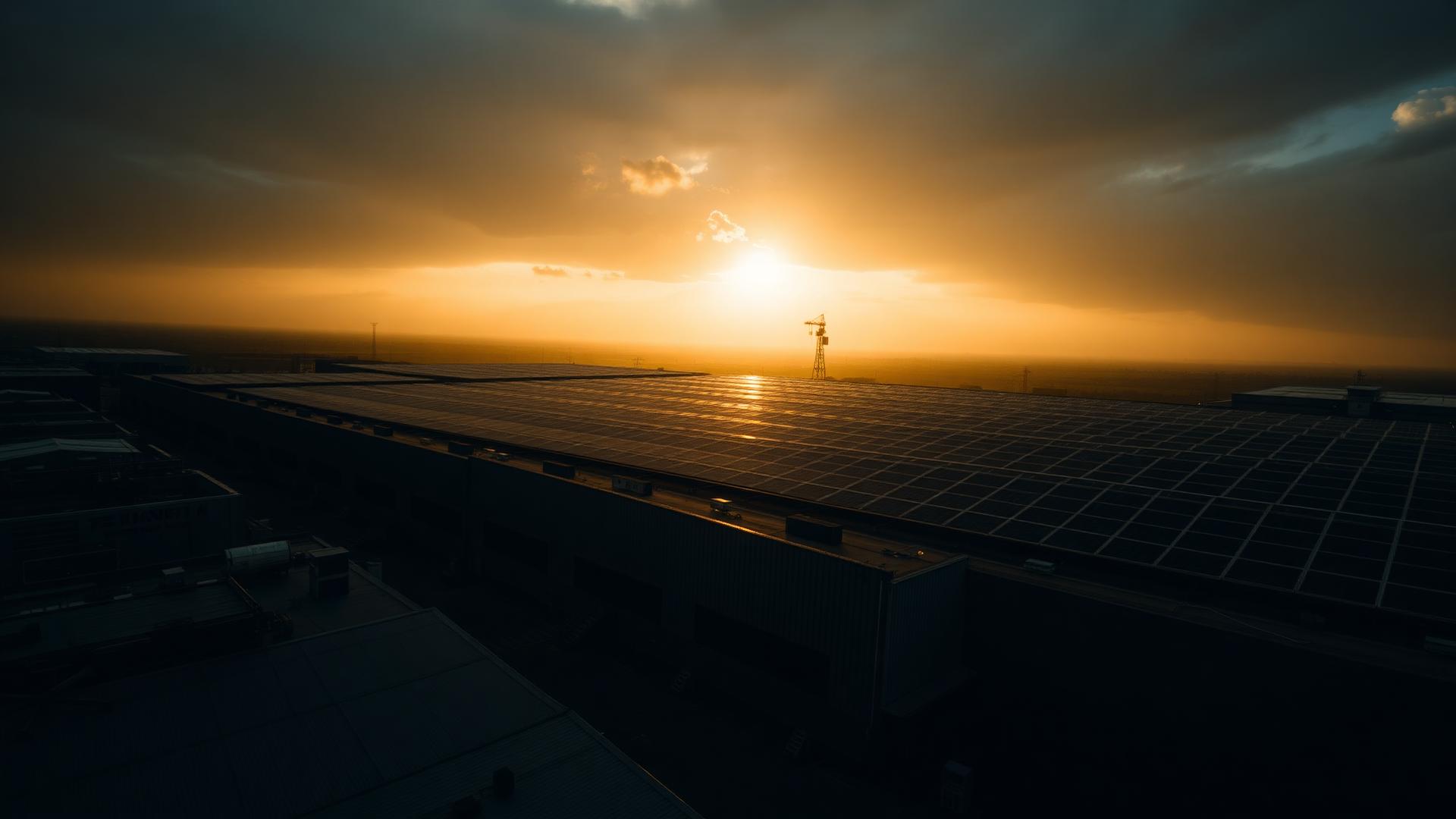
Packhouses, cold stores, grading and grading line buildings, workshops, machinery sheds and staff facilities are the useful roofs. They are unshaded, structurally straightforward and sit immediately next to a very large load, which is the ideal combination.
Ground mounted arrays suit larger holdings with headlands, unproductive corners or parcels that are difficult to crop. The area available can be an order of magnitude greater than any roof on the site, but planning consent and a distribution network operator connection then set the timetable rather than the build programme.
Land classification and local policy determine how straightforward a ground mounted scheme will be. Lower grade or genuinely unproductive parcels are the least contentious, and applications are stronger where the array is presented alongside continued agricultural use.
03
Lighting is the load, and it runs when the sun does not
Supplementary lighting is what has made modern horticulture electricity intensive, and it is deployed precisely because natural light is insufficient. It runs through the evening, overnight and in the dark months, which is the exact inverse of a solar generation profile.
So an array will not power the lighting. What can address it is tariff structure, particularly time of use contracts, shifting lighting hours where the crop protocol permits, and storage charged when import is cheap. Those measures often deliver more for a lighting led grower than adding panels.
Where heating has electrified, through heat pumps or electric boilers, the picture shifts back in solar's favour, because that load has a much stronger daytime component and lifts the site's ability to absorb generation.
04
Pumping, climate control and the daytime load that does fit
Not all of a grower's load is nocturnal. Irrigation and fertigation pumping, ventilation and screen motors, CO2 dosing plant, packhouse refrigeration, grading lines and cold stores run through the working day, and in the warmer months they run hard.
That daytime load is the part an array serves well, and it is often larger than growers expect once the packhouse is included. Refrigerated storage in particular provides the continuous base that makes a nearby roof array pay.
The sensible approach is therefore to model the site as two problems: a daytime load that solar addresses directly, and a night lighting load that is a tariff and storage question. Treating them as one number produces a misleading payback in either direction.
05
How NRG Solar handles a horticultural enquiry
We assess rather than install. That means looking at your packhouse and store roofs first, at land second, and telling you honestly if the strongest measure for your business is not solar at all but a different supply contract or an efficiency programme.
Where a project does make sense, we match you with one vetted installer in the network working in your area, ideally one that has delivered agricultural or horticultural schemes and understands biosecurity, crop protection during works and access around a live growing operation.
The service is free to you. Installers pay us if work proceeds, which is precisely why we can afford to tell a grower that panels on the glass are a bad idea.
Typical system size in this sector
Sites of this kind commonly support arrays in the region of 50 kWp to 1000 kWp. Your own figure depends on roof area, orientation and load, which the free assessment below works out from your inputs.